The Ultimate Guide to Maintaining Your Garden Tools for Longevity
Tools are an crucial part of any gardener’s arsenal, and proper maintenance is key to ensuring their longevity and effectiveness. By taking time to care for your tools, you can enhance their performance and save money in the long run. In this guide, you’ll learn practical tips and techniques for keeping your garden tools in top condition, including How to Clean Garden Tools in 5 Easy Steps. Equip yourself with the knowledge to maximise the lifespan of your gardening crucials.
Key Takeaways:
- Regular cleaning and oiling prevent rust and extend tool life.
- Sharpen blades periodically to ensure efficient cutting and reduce strain.
- Store tools in a dry, organised space to minimise damage and clutter.
Understanding Types of Garden Tools
Every gardener should familiarise themselves with the various types of tools available, as each serves distinct purposes. From hand tools for intricate work to power tools for larger tasks, understanding what you need can enhance your gardening efficiency.
- Hand Tools
- Power Tools
- Cutting Tools
- Soil Preparation Tools
- Watering Tools
Recognising the right tools for your gardening projects ensures you select the best equipment for every task.
| Type of Tool | Description |
|---|---|
| Hand Tools | Essential for small tasks, these provide precision and control in the garden. |
| Power Tools | Electric or battery-operated, suitable for heavy-duty work. |
| Cutting Tools | Includes shears and saws for plant management. |
| Soil Preparation Tools | Tools designed to prepare and maintain soil health. |
| Watering Tools | Equipment that assists in watering plants effectively. |
Hand Tools
Hand tools play a vital role in any garden, allowing you to perform precise tasks such as planting seeds, weeding, and pruning. Tools like trowels, pruners, and hoes are necessary and typically made from durable materials for longevity. Regular maintenance such as cleaning and oiling is needed to extend their life and ensure functionality.
Power Tools
Power tools significantly ease the workload in large gardens, enabling you to accomplish tasks efficiently. Tools such as lawn mowers, hedge trimmers, and tillers save both time and effort, making them indispensable for bigger projects. Familiarising yourself with the proper settings and usage techniques maximises their effectiveness, ensuring your gardening remains productive.
When considering power tools, focus on their intended use and size of your garden. For instance, a lightweight electric mower may suffice for a modest lawn, while a heavy-duty model suits larger properties. Regular checks on battery life and motor efficiency can prevent breakdowns, keeping your gardening efforts uninterrupted. Investing in quality tools may initially seem costlier but pays dividends in durability and performance over time.
Essential Tips for Tool Maintenance
To ensure your garden tools remain in optimal condition and provide years of service, adhering to a routine maintenance schedule is vital.
- Clean tools after each use.
- Sharpen blades regularly.
- Inspect for rust and damage consistently.
- Oil moving parts to avoid wear.
- Store tools properly to prevent moisture collection.
This will keep them functioning effectively.
Cleaning Techniques
Regular cleaning is key to prolonging the life of your tools. After each use, remove dirt and sap with warm soapy water and a stiff brush. Rinse thoroughly and dry before storing. For stubborn rust, using a wire brush or vinegar can be effective. Ensuring your tools are clean prevents corrosion and maintains their efficiency.
Lubrication and Storage
Proper lubrication and storage significantly enhance your tools’ lifespan. Apply a lightweight oil to moving parts, such as hinges and blades, to reduce friction and wear. Store tools in a dry, sheltered space, preferably hung or on a pegboard to avoid moisture buildup. This organised approach will help minimise rust and maintain tool sharpness.
When applying oil, focus on the pivot points, cutting edges, and any joints to facilitate smooth operation. Cleaning and oiling tools immediately after use can make a significant difference, as exposure to dampness can drastically affect performance. Additionally, placing silica gel packets in your storage area can absorb excess moisture, further protecting your tools from rust. A little consistent effort in lubrication and thoughtful storage practices will extend your equipment’s life remarkably.
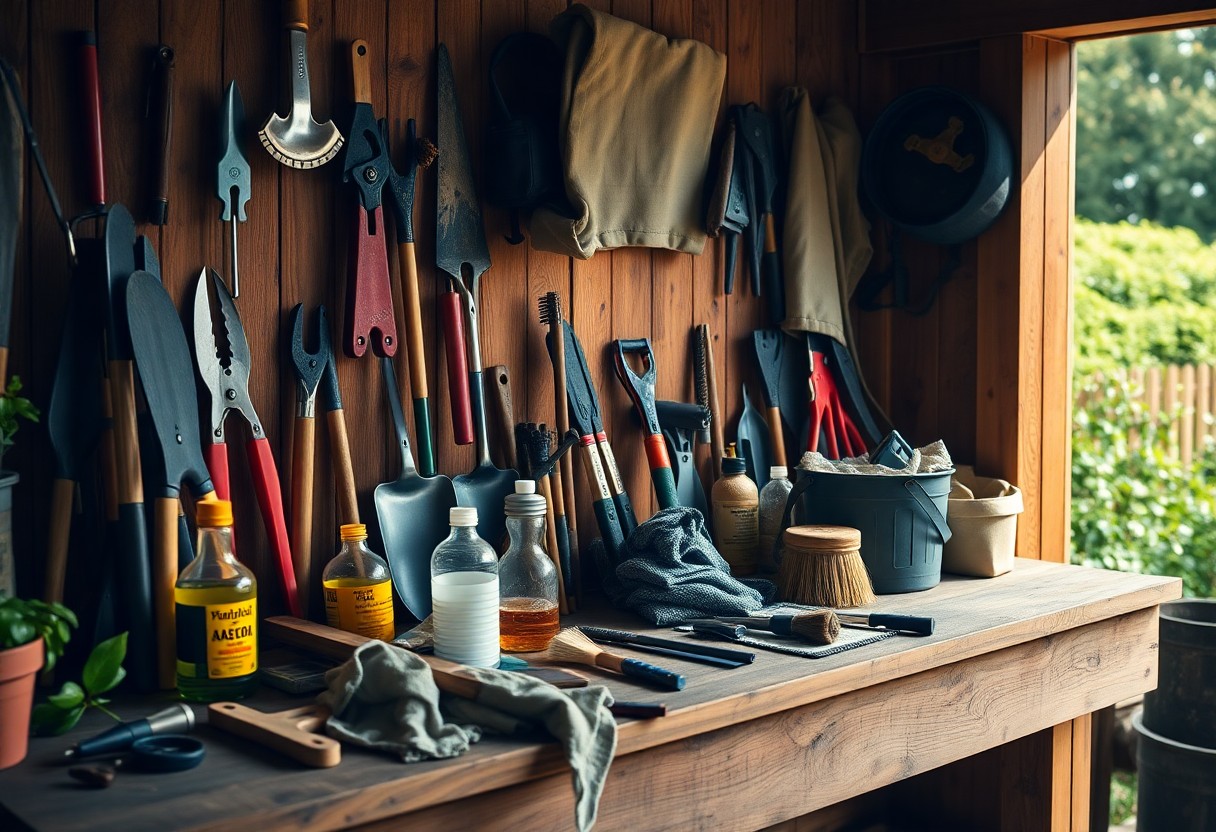
Step-by-Step Guide to Tool Care
To preserve the efficiency and lifespan of your garden tools, follow these necessary maintenance steps. Regular upkeep involves cleaning, sharpening, and repairing tools as necessary. For a detailed exploration of these practices, consult the Ultimate Guide to Maintaining your Garden Tools. Below is a simplified table to guide your tool care routine.
| Task | Frequency |
| Cleaning | After each use |
| Oiling | Monthly |
| Sharpening | Every few months |
| Repair | As needed |
Sharpening Tools
Keeping your tools sharp enhances their performance and reduces strain during use. Invest in a good-quality sharpening tool and sharpen blades regularly, ideally every few months or more frequently if used extensively. Well-maintained edges not only make cutting easier but also minimise damage to plant materials.
Repairing Damaged Equipment
It’s important to address any damage to your tools promptly to avoid further issues. Inspect your equipment regularly for signs of wear, such as cracks or breaks, and consider repairing rather than replacing when possible. Simple fixes, like replacing broken handles or securing loose screws, can significantly extend the life of your tools.
For instance, if a shovel head becomes loose, tightening it with screws or a wrench can restore its functionality. Similarly, if your pruner blades are chipped, you might replace just the blades rather than the entire tool, a cost-effective approach. Familiarise yourself with basic repair techniques, and you’ll find maintaining your tools both rewarding and economical.
Key Factors Affecting Tool Longevity
Your garden tools’ lifespan is influenced by several key factors that determine how well they withstand regular use. These include:
- Material quality
- Frequency of use
- Storage conditions
- Maintenance practices
Recognising these elements helps you make informed decisions to maximise your tools’ lifespan.
Material Quality
The materials used in your garden tools play a pivotal role in their durability. Tools made from high-carbon steel, for instance, offer strength and sharpness but may require additional care to prevent rust. Stainless steel, while resistant to corrosion, can be heavier and less flexible. Opting for tools with reinforced handles, such as fibreglass or hardwood, ensures added resilience and longevity, ultimately impacting performance over time.
Frequency of Use
How often you utilise your garden tools significantly affects their longevity. Frequent use can lead to quicker wear and tear, especially on movable parts like blades and hinges. For example, if you use pruners daily, they will require a more diligent maintenance routine compared to those used occasionally. Understanding your gardening habits allows you to adjust your maintenance schedule accordingly, ensuring your tools remain effective despite regular use.
The more you use your tools, the greater the need for upkeep. Regular checks for blunt edges, loose screws, or rust spots become vital, especially for frequently used items like shovels and secateurs. Developing a systematic approach to maintenance based on how often you engage with each tool can help prevent breakdowns and extend their lifespan. The goal is to provide just enough care tailored to your gardening pace, keeping your tools ready for action. This proactive practice not only enhances performance but also saves you money in the long run by reducing the need for replacements.
Pros and Cons of Different Tool Materials
| Material | Pros and Cons |
|---|---|
| Stainless Steel | Durable and resistant to rust; can be expensive |
| Carbon Steel | Sharp and affordable; prone to rust without proper care |
| Aluminium | Lightweight and resistant to rust; may bend or dent easily |
| Plastic | Resistant to rust and lightweight; can be less sturdy |
| Wood | Natural feel and aesthetic; requires maintenance to prevent rotting |
| Fibreglass | Very strong and weather-resistant; can be more expensive |
| Composite | Durable with a good grip; may not last as long as metal |
| Brass | Highly durable and resistant to corrosion; can tarnish |
| Rubber | Excellent grip; may wear down with prolonged use |
| Titanium | Very strong and lightweight; higher cost |
Stainless Steel vs. Carbon Steel
With respect to stainless steel and carbon steel, both excel in their own right. Stainless steel is renowned for its rust-resistant properties, making it ideal for humid conditions, while carbon steel is favoured for its sharpness and affordability, provided you take the necessary steps to prevent rust. Your choice may depend on your gardening needs and maintenance preferences.
Plastic vs. Wooden Handles
Choosing between plastic and wooden handles often hinges on comfort and durability. Plastic handles are usually lighter and resistant to moisture, but they can lack the premium feel and grip of wood. Wooden handles, while offering an ergonomic grip, necessitate more upkeep to remain in good condition over time.
Wooden handles can provide a comfortable grip, often moulding to the shape of your hand with use, which enhances comfort during long gardening sessions. However, they require more care, including regular oiling to prevent drying and cracking. In contrast, plastic handles are low-maintenance and often feature textured surfaces for improved grip, but may not offer the same tactile feedback or aesthetic appeal that wood provides. Balancing these aspects can help you select the handle material that best suits your gardening style and preferences.

Seasonal Maintenance Checklist
Implementing a seasonal maintenance checklist can significantly enhance the longevity of your garden tools. It’s vital to address your tools during spring and fall to ensure they are ready for use and stored correctly. Regular inspections, cleaning, and maintenance tasks tailored to each season will keep your tools in optimal condition and prevent deterioration over time.
Spring Prep
As spring arrives, focus on cleaning and sharpening your tools. Begin by removing any dirt, rust, or debris from blades and handles. A wire brush and soapy water can be effective for this task. Once cleaned, sharpen blades with a file or sharpening stone to ensure precise cuts throughout the growing season, promoting healthier plants.
Fall Storage
When autumn comes, it’s vital to prepare your gardening tools for storage. Clean all tools thoroughly to avoid rust and corrosion during the winter months. Make sure to dry them completely before storing. Applying a light coat of oil on metal parts helps prevent moisture damage and maintains their integrity for the next season.
During fall storage, consider organising your tools in a dry, sheltered space. Using pegboards or tool racks can help maximise space and keep your tools accessible and visible. Additionally, wrapping blades with protective coverings will safeguard them from nicks and damage. Taking these steps ensures your tools emerge from storage ready for action come spring.
Final Words
On the whole, maintaining your garden tools is imperative for ensuring their longevity and efficiency. By regularly cleaning, sharpening, and storing your tools properly, you can significantly extend their lifespan and enhance your gardening experience. Investing a little time in their upkeep not only saves you money in the long run but also boosts your productivity in the garden. Take pride in caring for your tools, as they are an invaluable part of your gardening success.
You may also like