How to Grow Tomatoes Like a Pro
Most gardeners yearn for the satisfaction of growing their own tomatoes, and with the right techniques, you can achieve a bountiful harvest. This guide will provide you with necessary tips and strategies for cultivating tomatoes effectively in your garden. From selecting the right variety to mastering the perfect watering schedule, you’ll soon have delicious, home-grown tomatoes. For more insights, check out these 12 Tomato Planting Hacks that will enhance your tomato-growing experience.
Key Takeaways:
- Select the right tomato variety for your climate and space.
- Ensure proper soil preparation and fertilisation for healthy growth.
- Implement effective watering techniques and pest management strategies.

Choosing the Right Tomato Varieties
The success of your tomato crop hinges on selecting the appropriate varieties. With a multitude of options available, consider factors such as your local climate, available space, and intended use—fresh eating, cooking, or preserving. Varieties range in size, flavour, and growth habits, allowing you to tailor your garden to your preferences. Researching and sampling different types can enhance your gardening experience and yield superior results.
Determinate vs. Indeterminate
Determinate tomatoes grow to a specific height and produce their fruit over a short period, making them ideal for canning. In contrast, indeterminate varieties continue to grow and produce fruit throughout the season, requiring staking for support. Your choice will depend on how you plan to harvest and use the tomatoes, as well as your garden space.
Heirloom vs. Hybrid
Heirloom tomatoes, often celebrated for their rich flavours and unique colours, are open-pollinated varieties passed down through generations. Hybrids, on the other hand, result from intentional cross-breeding to enhance traits like disease resistance and yield. While heirlooms may offer superior taste, hybrids are generally more reliable for high productivity and uniformity.
Heirloom varieties tend to provide complex flavours and a diverse range of colours and shapes, making them a favourite among culinary enthusiasts. Varieties like ‘Brandywine’ and ‘Cherokee Purple’ exemplify this category, boasting a beloved taste profile. Conversely, hybrids such as ‘Early Girl’ and ‘Big Beef’ are engineered to produce bountiful harvests, showcasing resistance to common problems like blight. When choosing, weigh the importance of flavour against the benefits of reliability and ease of care, depending on your gardening goals.
Understanding Growing Conditions
Successful tomato cultivation begins with a clear understanding of the conditions necessary for optimal growth. Factors such as soil quality, light exposure, and temperature play critical roles in determining the yield and health of your plants. By tailoring your approach to suit these environmental requirements, you can elevate your tomato gardening to a professional level.
Soil Quality and Preparation
Your tomatoes thrive in well-drained, nutrient-rich soil. Aim for a pH level between 6.0 and 6.8 for optimal growth. Incorporate organic matter like compost to enhance soil structure and fertility. Prior to planting, ensure the soil is loose and crumbly to promote healthy root development.
Light and Temperature Requirements
Tomatoes require full sun, ideally around six to eight hours of direct sunlight daily. Maintaining the right temperature is also necessary, as they flourish best between 20°C to 25°C during the day and not below 10°C at night.
| Light Requirement | 6-8 hours of direct sunlight daily |
| Optimal Day Temperature | 20°C – 25°C |
| Minimum Night Temperature | Not below 10°C |
When exposed to inadequate light or temperature fluctuations, your tomato plants may experience stunted growth or blossom drop. Employ techniques such as using reflective materials to maximise light exposure or covering them during unexpected cold snaps to create a favourable microclimate. Monitoring local weather forecasts can further help ensure your tomatoes receive the optimal conditions for thriving.
| Signs of Insufficient Light | Long, leggy plants with small leaves |
| Excessive Heat Signs | Wilting leaves or sunscalded fruit |
Planting Techniques
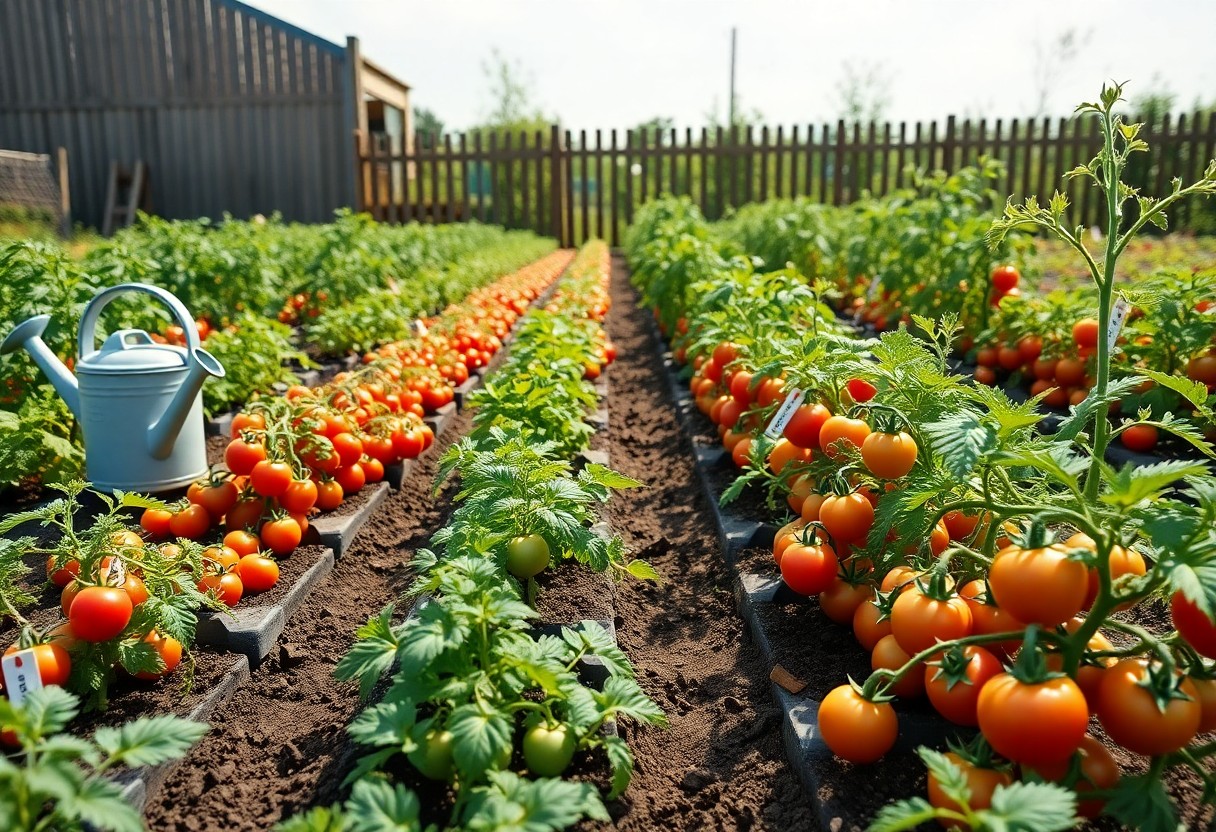
The success of your tomato garden hinges on effective planting techniques. Start by selecting healthy, disease-free seedlings or seeds, paying attention to your specific variety’s needs. Ensure you choose a location with at least six to eight hours of sunlight daily, and prepare your soil with ample compost to enrich its nutrient content. Proper spacing—approximately 45-60 cm between plants—allows for air circulation and robust growth, promoting a bountiful harvest.
Seed Starting Indoors
Starting your seeds indoors gives you a head start on the growing season. Use biodegradable pots or seed trays filled with a quality seed starting mix, and plant seeds about 1-2 cm deep. Keep the trays in a warm, well-lit area; a temperature of around 21°C promotes germination. Ensure that seedlings receive adequate moisture without waterlogging, and when they’re around 10-15 cm tall, they’re ready for transplanting.
Transplanting Outdoors
Timing is imperative when transitioning your tomato plants outdoors. Wait until all danger of frost has passed and the soil temperature reaches at least 15°C for optimal growth. Carefully transplant your seedlings into prepared garden beds or pots, setting them just deeper than they were in their pots to encourage strong root development. A mix of compost and soil will give them the nutrients they need to thrive.
When transplanting outdoors, dig a hole large enough to accommodate the root ball without crowding. If your seedlings are leggy, bury them deeper to promote more root growth. Space each plant adequately to allow for air circulation, which helps reduce the risk of disease. Water them thoroughly right after planting, and consider using mulch to retain moisture and suppress weeds. By paying attention to these details, you will set the stage for a prolific tomato harvest.
Care and Maintenance Tips
Caring for your tomato plants involves consistent attention to their needs to ensure robust growth and bountiful fruit. Follow these tips for optimal results:
- Water regularly and deeply to encourage strong roots.
- Apply a balanced fertiliser every 4-6 weeks during the growing season.
- Monitor for pests and diseases, addressing issues promptly.
- Mulch around the base to retain moisture and suppress weeds.
- Provide adequate sunlight, aiming for at least 6-8 hours a day.
The success of your tomato plants is tied to diligent care and maintenance.
Watering and Fertilising
Tomatoes thrive on consistent watering, ideally receiving about 2.5 cm of moisture weekly. Ensure deep watering to encourage roots to grow downwards. Fertilisation plays a critical role, so opt for a balanced fertiliser to support healthy foliage and fruit. You can use organic options like compost or well-rotted manure to enhance soil quality.
Pruning and Supporting Plants
Pruning your tomato plants encourages better air circulation and directs energy towards fruit production. Remove any suckers that develop in the leaf axils to promote stronger main stems. Providing support through stakes or cages prevents the plants from sprawling on the ground, reducing the risk of disease and rot.
Utilising stakes for support is highly effective; stake plants when they are about 30 cm tall. A single stake for each plant will suffice, allowing it to grow upwards, improving airflow and sunlight exposure. For indeterminate varieties, consider using cages which accommodate their sprawling habit, making it easier for you to harvest ripe fruit without damaging the plant. Regular pruning, along with effective support, transforms your tomato plants into structured, productive specimens.
Pest and Disease Management
Managing pests and diseases is vital for healthy tomato plants. Regular monitoring and implementing preventive strategies can keep your crop thriving. This includes using companion planting, maintaining good hygiene in your growing area, and selecting resistant varieties. Integrated pest management techniques will help minimise risks and ensure a bumper harvest.
Common Pests and Control Methods
Common pests threatening your tomatoes include aphids, whiteflies, and tomato hornworms. You can manage these pests through natural predators, such as ladybirds for aphids, or by applying insecticidal soap. Crop rotation and keeping your garden tidy will also help reduce pest populations and maintain a healthy ecosystem around your plants.
Recognising and Treating Diseases
Disease can significantly impact your tomato plants if not caught early. Look for signs like yellowing leaves, wilting, or unusual spots. Fungal infections, such as blight, can spread quickly, so it’s paramount to act promptly. Treatment often involves removing and destroying affected plants, practicing crop rotation, and applying fungicides when necessary.
To effectively recognise and treat diseases, remain vigilant in your inspections. Monitor the lower leaves for early symptoms of blight, which often start as dark spots. If you observe wilting, it may indicate root rot or vascular wilt; these issues frequently arise from overwatering or poorly draining soil. Incorporating disease-resistant varieties into your garden can also help reduce incidence. Regularly sanitising your tools and equipment helps limit disease spread, ensuring your tomato plants remain healthy and vibrant throughout the growing season.
Harvesting Tips
Successful harvesting can elevate your tomato-growing experience. To ensure you gather peak fruits, consider the following tips:
- Choose the right time of day, ideally the morning, when temperatures are cooler.
- Use clean, sharp shears to prevent damage to the plant.
- Handle tomatoes gently to avoid bruising.
- Harvest fruits that are fully coloured and slightly firm to the touch.
Assume that perfect timing and technique can significantly affect the quality of your harvest.
When to Harvest
Harvest your tomatoes when they reach their full colour and have a slight give when gently squeezed. Typically, this occurs around 70-85 days after transplanting, depending on the variety. Watch for signs of ripening, such as a deeper colour and a sweet aroma, to identify the ideal harvest moment.
Proper Harvesting Techniques
Utilising the right techniques during harvest is imperative for ensuring your tomatoes remain unblemished. Always use sharp, sterile scissors or pruning shears to cut the fruit cleanly from the vine without damaging the plant. Grasp the tomato gently to avoid bruising it, and consider picking at the stem rather than pulling on the fruit. This method not only preserves the quality of the tomatoes but also promotes plant health.
Conclusion
From above, you can see that mastering the art of growing tomatoes requires attention to detail and consistent care. By selecting the right variety, ensuring optimal soil conditions, and implementing proper watering techniques, you can significantly enhance your tomato yield. For further insights, check out Growing Tomatoes Like A Pro: Tips For A Bumper Harvest. With dedication and the right practices, your tomato garden will thrive and provide a delicious bounty.
FAQ
Q: What is the best time to plant tomatoes?
A: The ideal time to plant tomatoes is after the last frost when soil temperatures consistently reach around 15°C (59°F). This is typically in late spring, depending on your local climate.
Q: How much sunlight do tomato plants need?
A: Tomato plants require at least six to eight hours of direct sunlight each day to thrive and produce a bountiful crop. Choose a sunny spot in your garden for optimal growth.
Q: What type of soil is best for growing tomatoes?
A: Tomatoes flourish in well-drained, nutrient-rich soil with a pH between 6.0 and 7.0. Incorporating organic matter, such as compost, can enhance soil quality.
Q: How often should I water my tomato plants?
A: Water tomato plants deeply and consistently, ensuring the soil remains moist but not waterlogged. Generally, aim for watering two to three times a week, adjusting for weather conditions.
Q: What are common pests or diseases that affect tomato plants?
A: Common pests include aphids, whiteflies, and tomato hornworms, while diseases such as blossom end rot and blight may occur. Regularly inspect plants and employ preventative measures, including crop rotation and proper spacing.
You may also like